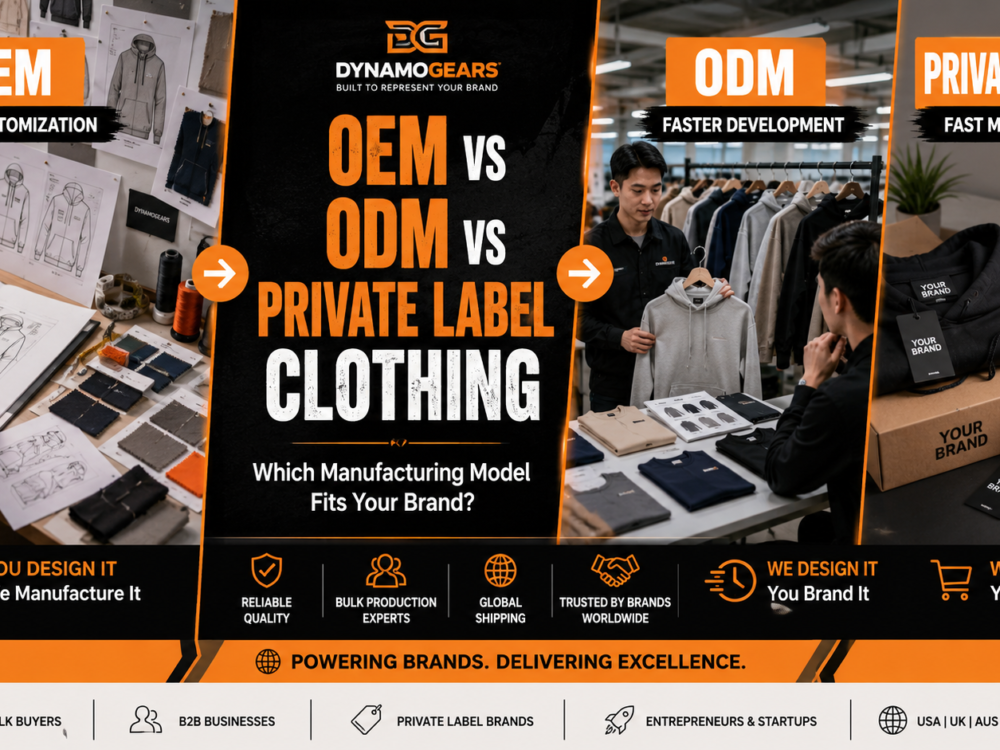
The global apparel industry offers several manufacturing options for businesses looking to launch or expand a clothing brand. Among the most popular choices are OEM vs ODM vs Private Label Clothing, three production models that help businesses bring products to market efficiently. However, choosing the right model can significantly impact your profit margins, brand identity, customization options, and long-term growth.
Whether you’re an entrepreneur launching a startup, a fashion retailer seeking reliable production partners, or a growing private label brand looking for scalable manufacturing solutions, understanding the differences between these models is essential. In this guide, we’ll compare OEM vs ODM vs Private Label Clothing, explain their advantages and limitations, and help you determine which option best suits your business goals.
Understanding OEM Clothing Manufacturing
OEM stands for Original Equipment Manufacturer. In this model, the buyer provides the clothing design, specifications, materials, branding requirements, and production details, while the manufacturer handles the production process. OEM manufacturing is highly popular among established clothing brands that want complete control over product development.
Benefits of OEM Manufacturing
- Full design ownership
- Complete customization of fabrics, colors, trims, and labels
- Strong brand differentiation
- Better control over product quality
- Ability to create unique fashion collections
Best For
- Established fashion brands
- Sportswear companies
- Streetwear labels
- Businesses requiring custom apparel manufacturing
- Brands seeking exclusive product lines
Potential Challenges
- Higher development costs
- Longer production timelines
- Larger minimum order quantities (MOQs)
- Additional sampling and prototyping expenses
For businesses aiming to build a unique market presence, OEM offers maximum flexibility and long-term brand value.
What Is ODM Clothing Manufacturing?
ODM stands for Original Design Manufacturer. Unlike OEM, the manufacturer already has existing clothing designs and product templates available. Buyers can select these products and make minor modifications before selling them under their own brand name. ODM helps businesses enter the market faster because much of the product development work is already completed.
Benefits of ODM Manufacturing
- Faster time to market
- Lower product development costs
- Reduced design workload
- Lower business risk
- Access to proven product designs
Best For
- New clothing startups
- Small fashion businesses
- Online apparel retailers
- Businesses testing new product categories
- Entrepreneurs with limited design resources
Potential Challenges
- Limited customization options
- Less product exclusivity
- Similar products may be sold to competitors
- Reduced brand differentiation
ODM manufacturing is often considered a practical solution for brands seeking efficient production with moderate customization.
What Is Private Label Clothing?
Private label clothing refers to ready-made apparel products manufactured by a supplier and sold under another company’s brand name. The products are usually pre-designed, and customization is mainly limited to branding elements such as labels, packaging, hang tags, and logos. Many successful eCommerce brands use private label apparel to launch products quickly while minimizing investment.
Benefits of Private Label Clothing
- Lowest startup costs
- Quick market entry
- Simplified inventory planning
- Lower minimum order quantities
- Easier supply chain management
Best For
- Ecommerce entrepreneurs
- Amazon sellers
- Boutique retailers
- Startup clothing brands
- Businesses validating product demand
Potential Challenges
- Minimal product customization
- Limited control over product features
- Higher market competition
- Lower product uniqueness
Private label clothing offers one of the easiest ways to start a fashion business without investing heavily in product development.
OEM vs ODM vs Private Label Clothing: Key Differences
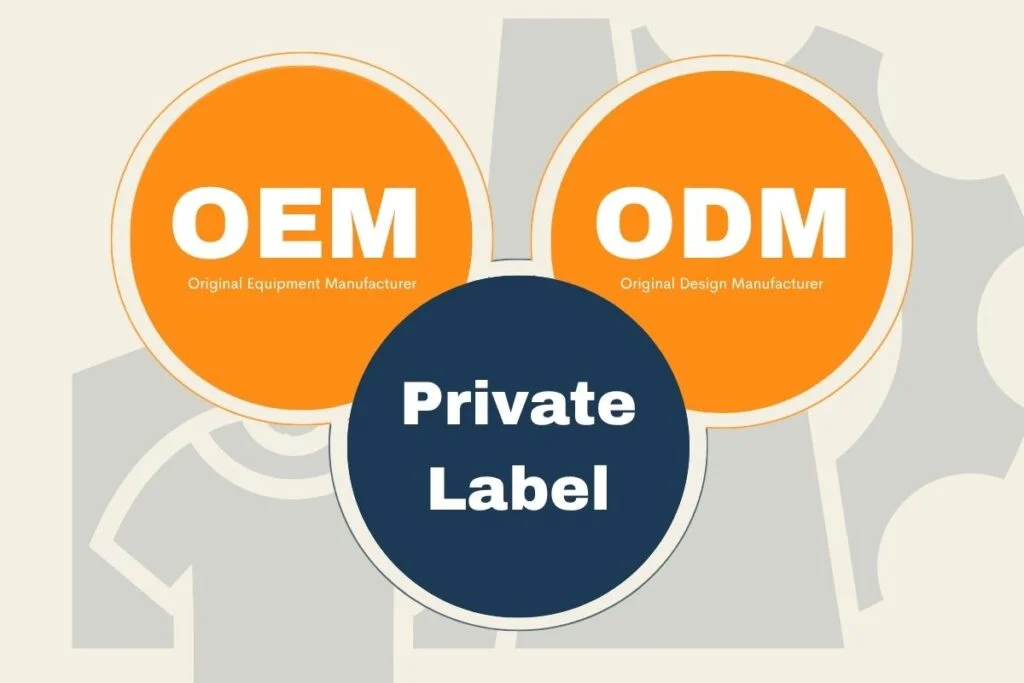
When evaluating OEM vs ODM vs Private Label Clothing, the main differences revolve around customization, investment, speed, and brand exclusivity.
Product Design
OEM: Fully custom designs created according to buyer specifications.
ODM: Existing manufacturer designs with limited modifications.
Private Label: Ready-made products branded under your company name.
Customization Level
OEM: Highest customization.
ODM: Moderate customization.
Private Label: Basic branding customization.
Time to Market
OEM: Longest production timeline.
ODM: Faster than OEM.
Private Label: Fastest route to launch.
Investment Required
OEM: Highest investment.
ODM: Moderate investment.
Private Label: Lowest investment.
Brand Exclusivity
OEM: Maximum exclusivity.
ODM: Partial exclusivity.
Private Label: Limited exclusivity.
Understanding these differences helps businesses align manufacturing strategies with their growth objectives.
Which Manufacturing Model Is Best for Bulk Buyers?
Bulk buyers and large-scale distributors often prioritize consistency, scalability, and profitability. For high-volume apparel sourcing, OEM manufacturing provides the strongest competitive advantage because it allows businesses to create exclusive products that competitors cannot easily replicate.
However, businesses seeking rapid inventory expansion may find ODM manufacturing more efficient due to shorter production cycles. Private label clothing works well for businesses entering new markets or testing demand before investing in fully customized product development.
How Private Label Brands Should Choose
For private label brands, selecting between OEM vs ODM vs Private Label Clothing depends largely on brand maturity.
New Brands
Private label manufacturing often provides the fastest and most affordable entry point.
Growing Brands
ODM offers a balance between customization and operational efficiency.
Established Brands
OEM manufacturing supports long-term brand building through unique product development and stronger intellectual property control. Many successful clothing companies begin with private label products, transition to ODM as they grow, and eventually move toward OEM manufacturing for complete product ownership.
Important Factors to Consider Before Choosing
Before selecting a manufacturing model, consider the following:
Budget
Determine how much capital is available for product development, sampling, inventory, and production.
Customization Requirements
If unique designs are critical to your brand identity, OEM may be the best choice.
Target Market
Different customer segments value exclusivity differently. Premium brands often benefit from OEM manufacturing.
Production Volume
Bulk orders generally justify the higher investment associated with OEM production.
Growth Strategy
Consider where you want your brand to be in three to five years. Your manufacturing choice should support long-term scalability.
Why More Entrepreneurs Are Exploring OEM Manufacturing
The rise of ecommerce, direct-to-consumer brands, and niche apparel markets has increased demand for custom clothing manufacturing. Entrepreneurs are increasingly recognizing that unique products help improve customer loyalty and profit margins.
While private label clothing remains popular for market entry, many brands eventually transition toward OEM solutions to gain greater control over product quality, innovation, and differentiation. As competition continues to intensify, investing in exclusive product development often becomes a strategic advantage.
Final Thoughts
Choosing between OEM vs ODM vs Private Label Clothing is one of the most important decisions for any apparel business. Each model offers distinct advantages depending on your budget, customization needs, and growth goals.
Private label clothing is ideal for rapid market entry and low-risk testing. ODM manufacturing provides a balance between speed and customization. OEM manufacturing offers the highest level of control, exclusivity, and long-term brand value. For entrepreneurs, bulk buyers, B2B companies, and private label brands, selecting the right manufacturing partner can significantly influence profitability, scalability, and market success.
Ready to Build Your Clothing Brand?
Whether you’re looking for custom apparel manufacturing, private label clothing production, OEM clothing manufacturing, or scalable B2B garment solutions, DynamoGears can help bring your vision to life.
Contact our team today to discuss your project and get a customized manufacturing solution: